

- October 13, 2026
- 0 Comments
- By admin
Travel like the Wind : I-Rin
There was a time when I drifted away from writing about my travels, retreating into an emptiness of feeling. I simply wanted to travel in silence, to release something that had been lingering deep within my subconscious, while taking the time to reflect on myself.
Yes, so many things are the consequences of our own actions. Yet the more we try to fix things, the more we make excuses, the more entangled everything becomes—like a monkey trying to untangle a fishing net. Everything grows complicated and chaotic, much like floodwaters overflowing a city. During the flood season,
Not much longer now! The hours of suffering will soon pass. Even as another great storm sweeps through, leaving us anxiously watching and waiting, we find ourselves living in an era when everything seems beyond control. It is not only nature that has become unpredictable; the hearts and minds of our fellow human beings seem to have lost hope, too, and faith in the basic conscience that distinguishes right from wrong.
The endless stream of political news leaves ordinary people sitting with their heads in their hands. What is wrong becomes right, while those who stand on the side of what is right are left bowing their heads before the power of authority.
Meanwhile, on the other side of the world, madness unfolds in the form of threats, explosions, and gunfire raining down like torrents of rain. It is a world driven by desires that run counter to the deepest feelings of the human heart. Nature has moved through its seasons, turning and changing in endless cycles for time immemorial. Yet, with each passing day, its extremes seem to grow more severe.
On a softly sunlit afternoon, I felt the urge to take myself somewhere—anywhere that might offer a sense of openness and emptiness, somewhere that would awaken my senses and broaden my perspective.
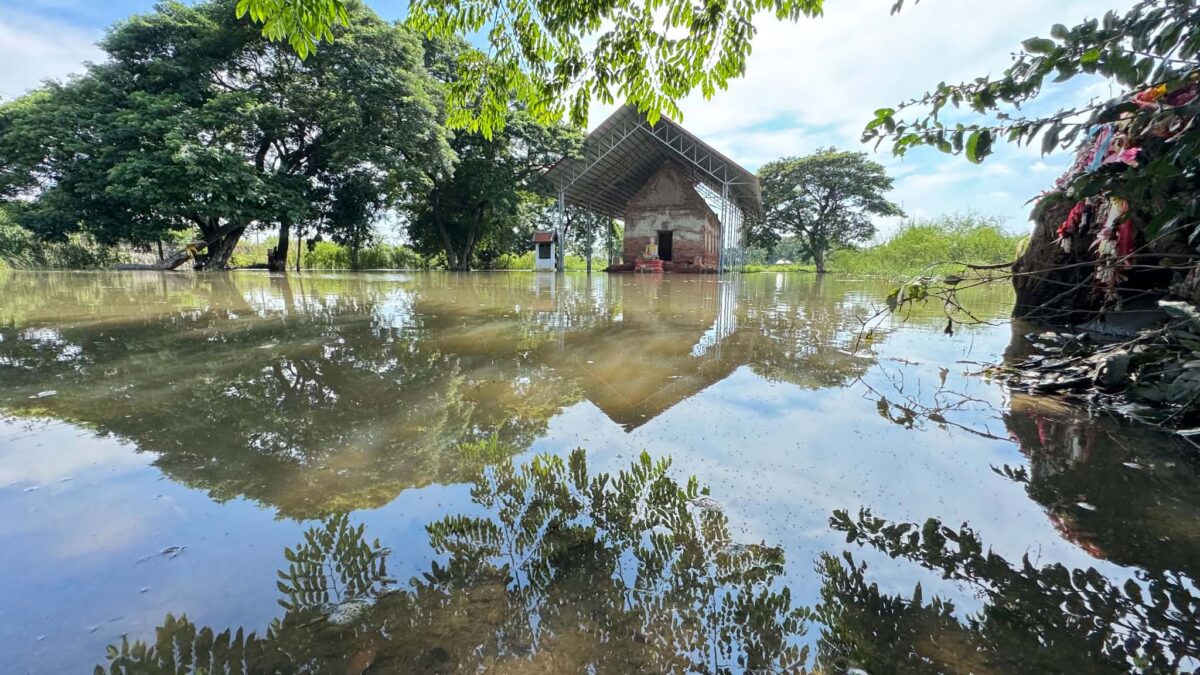
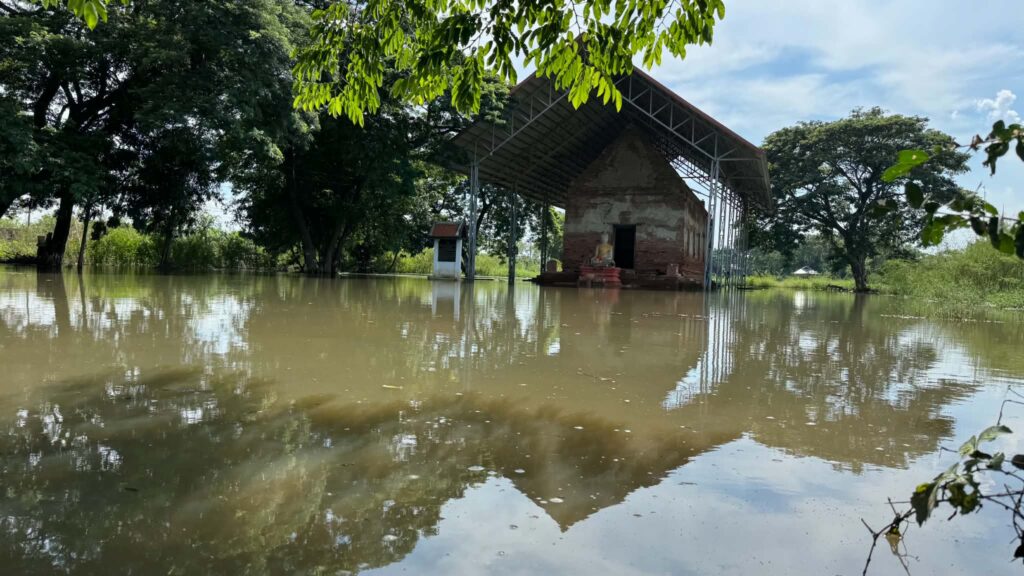
I drove out to see how high the Chao Phraya River had risen. Along the way, I stopped at an ancient site restored by the Fine Arts Department, its remains sheltered beneath a protective roof against the sun and rain. Whenever I pass through this area, I always pull over, walk around, explore the interior of the abandoned ordination hall, and read the information on the Fine Arts Department’s sign identifying the place as “Wat Song Phi Nong.”
Departing by boat, drifting past Phaya Mueang,
The empty city fades, leaving a heart bereft, my dear.
Departing, wandering on, with an aching, empty heart,
An empty heart beneath a crying sky, yearning and calling in longing.
The literary work that mentions Thung Phaya Mueang refers to an ancient settlement believed to have existed during the same period as Ayothaya, before the founding of the Kingdom of Ayutthaya. Historical traces of this settlement appear in Kamsuan Samut, an early Thai literary work.
The ancient ordination hall stands parallel to the Chao Phraya River, a waterway that once served as a vital route for transportation and as the heart of community and social life. The ancient settlement layout is believed to have followed a rectangular plan, comprising two settlements situated opposite one another.
One was Thung Phaya Mueang, located on the western bank—the left bank—of the Chao Phraya River. The other was Thung Phra Sadet, situated on the eastern bank of the former course of the river, near present-day Wat Sadet.
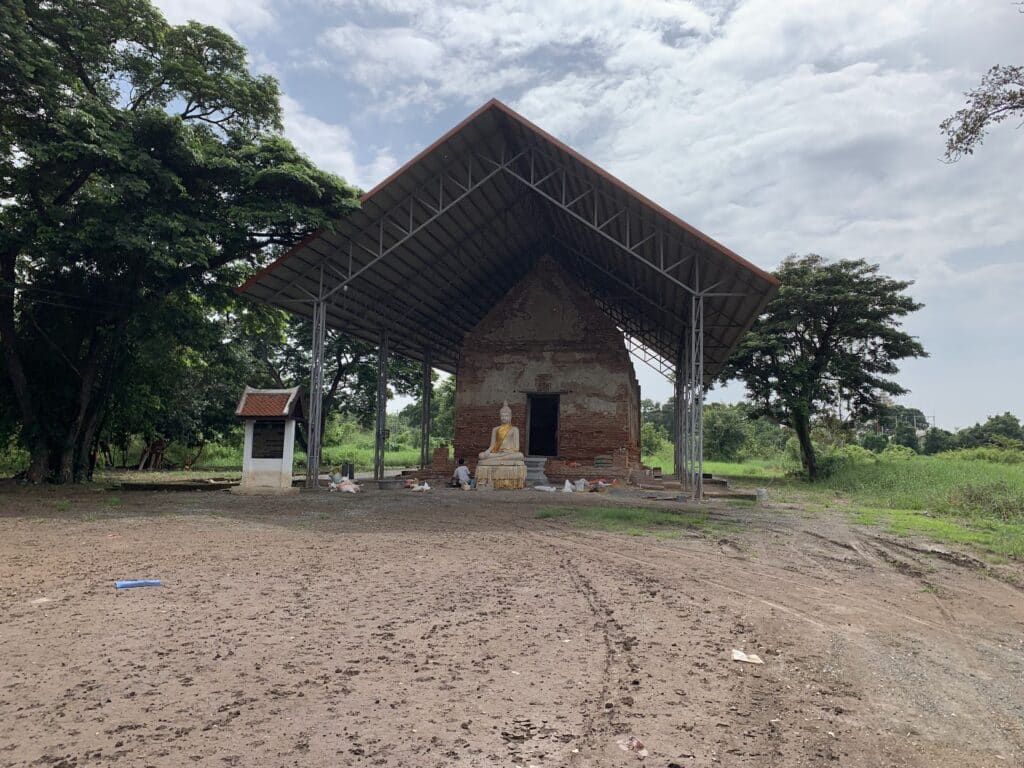
Summer on the Way to Wat Song Phi Nong (Abandoned Temple), Pathum Thani
Today, little remains visible of these two ancient settlements. New roads, houses, and expanding communities have gradually covered the old brick ruins and foundations. A water-supply canal cuts through part of the area, while urban expansion and the growth of Pathum Thani into an industrial center have further transformed the landscape…
The afternoon breeze rippled gently across the water, where waves shimmered beneath the sunlight. Flocks of birds settled on a traditional Thai-style spirit house. At times, they fluttered away to peck at the fruits of a sacred Bodhi tree whose branches had cast their shade for hundreds of years.
I stood there, listening to the lively chatter of the birds. Their calls were endlessly animated, yet somehow soothing. I listened, absorbed in their natural rhythm, and felt a sense of relief wash over me.
And yet, certain stories continue to remind us to turn inward and reflect. Nature and all living things follow a simple, honest order, governed by truths that cannot be distorted. Perhaps the most difficult thing to understand is our own emotional world—the expectations and hatred we carry, the burdens we place upon ourselves, until we forget that seasons, time, the wind, and the flowing river all move on according to their own nature.
Before long, these swollen waters may give way to the dryness of summer, leaving the land parched and short of water. In some ways, we humans are not so different from those flocks of birds, chattering away in endless commotion and before long, the floodwaters may recede, giving way to a dry season when water runs scarce.
Location and Characteristics
- Thung Phaya Mueang lies along the western (left) bank of the Chao Phraya River, in Ban Ngio Subdistrict, Sam Khok District. Traces of a rectangular system of moats and earthen embankments, running parallel to the river, have been identified.
- Thung Phra Sadet lies on the eastern bank of the former course of the Chao Phraya River, near present-day Wat Sadet. It is believed to have formed a settlement situated opposite Thung Phaya Mueang.
- Both sites are regarded as substantial ancient settlements contemporary with Ayothaya Si Ram Thep Nakhon, with evidence dating back to the early 14th century CE.
#ThungPhayaMueang #ThungPhraSadet
#WatSongPhiNong #PathumThani
#FineArtsDepartment
#TravelLikeTheWind
#The365DayTravel

Leave a comment