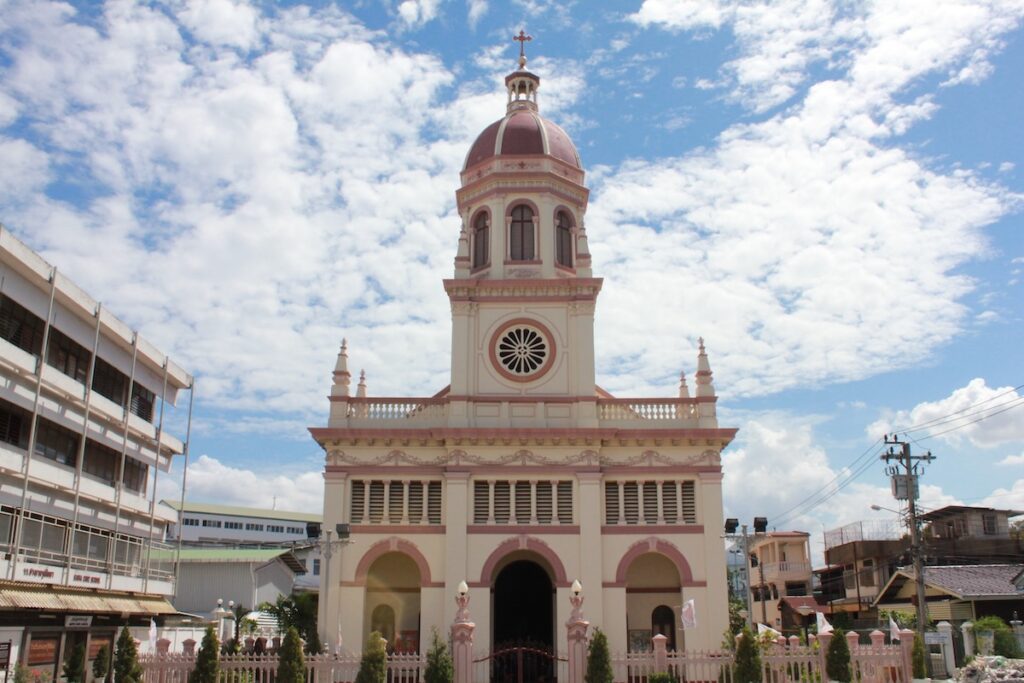
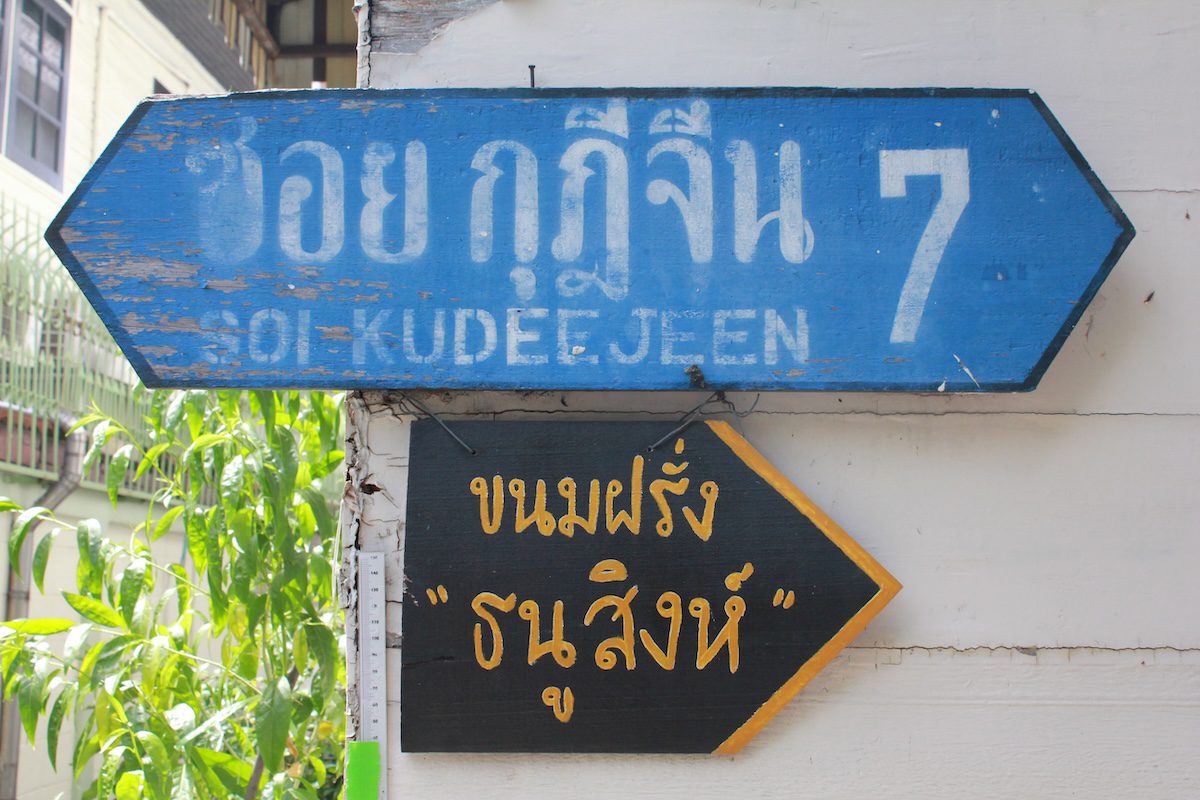
The cool breeze from the Chao Phraya River drifts softly through the narrow alleys of Kudeejeen. The sweet aroma of Khanom Farang Kudeejeen mingles with the gentle hum of long-tail boats gliding across the water. I walk slowly along the old brick path until I reach the white church standing gracefully by the river — the Santa Cruz Church, a timeless landmark of Thonburi that has stood for more than two centuries.
This church symbolizes the friendship between Siam and Portugal — the first European nation to establish trade with the Ayutthaya Kingdom in the 16th century. After Ayutthaya fell in 1767, many Catholic communities of Portuguese descent sought refuge under the protection of King Taksin the Great. The King graciously allowed them to settle along the Thonburi riverside and to build a church for their worship.
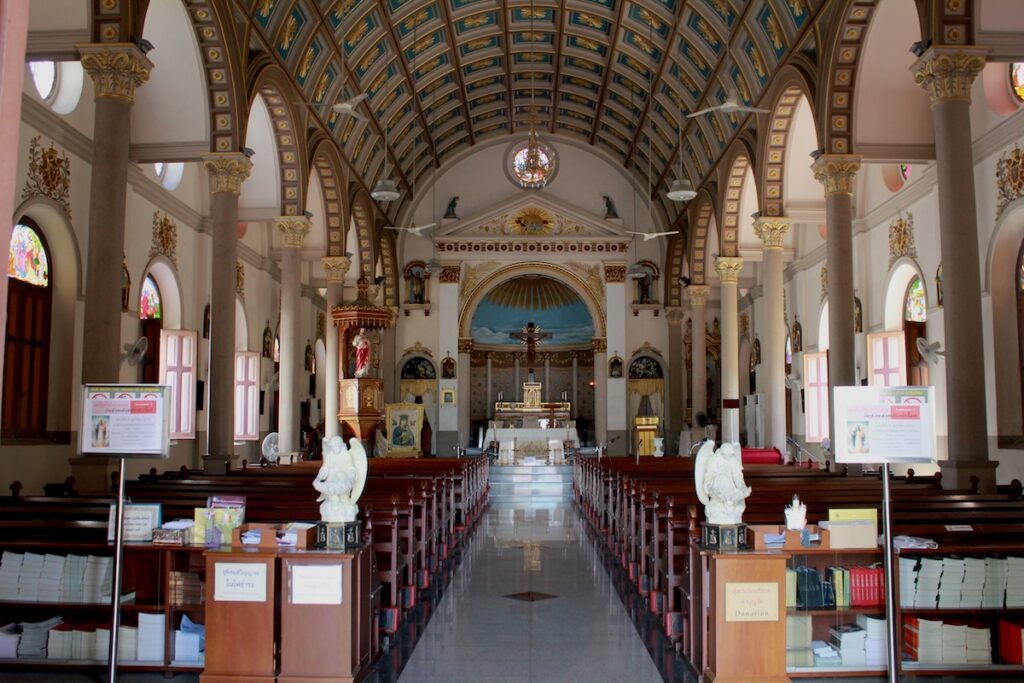
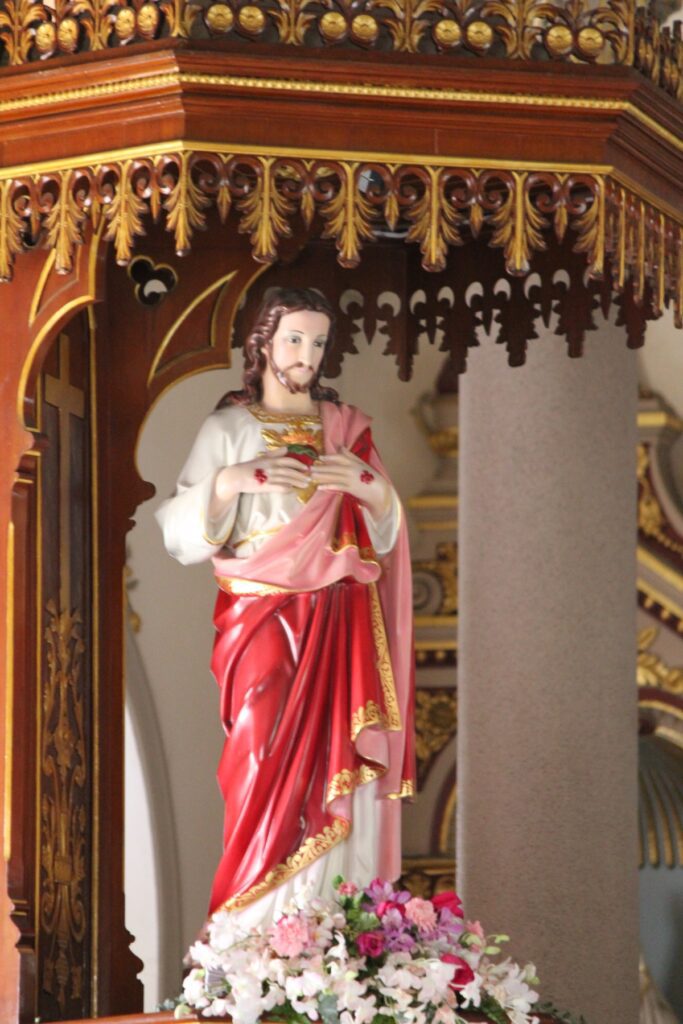
The first Santa Cruz Church was built in 1769, a humble bamboo structure with a thatched roof. Over time, it was rebuilt several times — first in brick and mortar during King Rama III’s reign, and later transformed into the grand Neo-Renaissance church we see today during King Rama VI’s era. Its distinctive red dome and arched windows bring a touch of Europe to the heart of old Bangkok.
Surrounding the church is the Kudeejeen community, a harmonious blend of Thai, Chinese, and Portuguese heritage. The scent of incense from nearby shrines, the aroma of freshly baked pastries, and the soft chime of church bells all weave together to tell a single story — one of coexistence and shared history.
As the evening sun glows upon the golden dome, the river breeze whispers softly. For a moment, time seems to stand still. Thonburi is not just an old district — it is a bridge between the past and the present, the living breath of Bangkok, carrying stories of faith, friendship, and the enduring spirit of a multicultural home.




Leave a comment