Who are the Mon? From whence did they journey? Like a wind carrying tales from the past, anthropologists have charted their odyssey from southern China to the golden lands of Suvarnabhumi. One Tibeto-Burman current brought the Pyu, who established the illustrious Sri Ksetra kingdom in central Myanmar. Another, the Karan or Rakhine, found their haven by the Bay of Bengal. And a vital stream, the Mon-Khmer, navigated the Salween River’s course to found the city of Thaton, or Suvarnavadi, at its mouth. Here, a “window of civilization” opened, embracing Buddhism and Indian culture until it blossomed magnificently.
But the winds of history are ever-shifting. The once-mighty Mon kingdom was shattered by Burmese conquest, its people scattered like dust motes. Time and again, these winds carried waves of Mon refugees to seek sanctuary under the royal protection of Siamese kings. One such significant surge occurred around 1664 CE, during the reign of King Narai the Great. After a Mon uprising against Burmese rule was quelled, over 10,000 souls, led by Suwannadeva and Thamum Mwai who had slain the Burmese governor of Mottama, journeyed across the border via the Three Pagodas Pass. King Narai graciously allowed them to settle in places like “Ban Sam Khok in Pathum Thani, Ban Pak Kret in Nonthaburi, Ratchaburi, and Kanchanaburi,” where Mon communities took deep root in Thai soil.
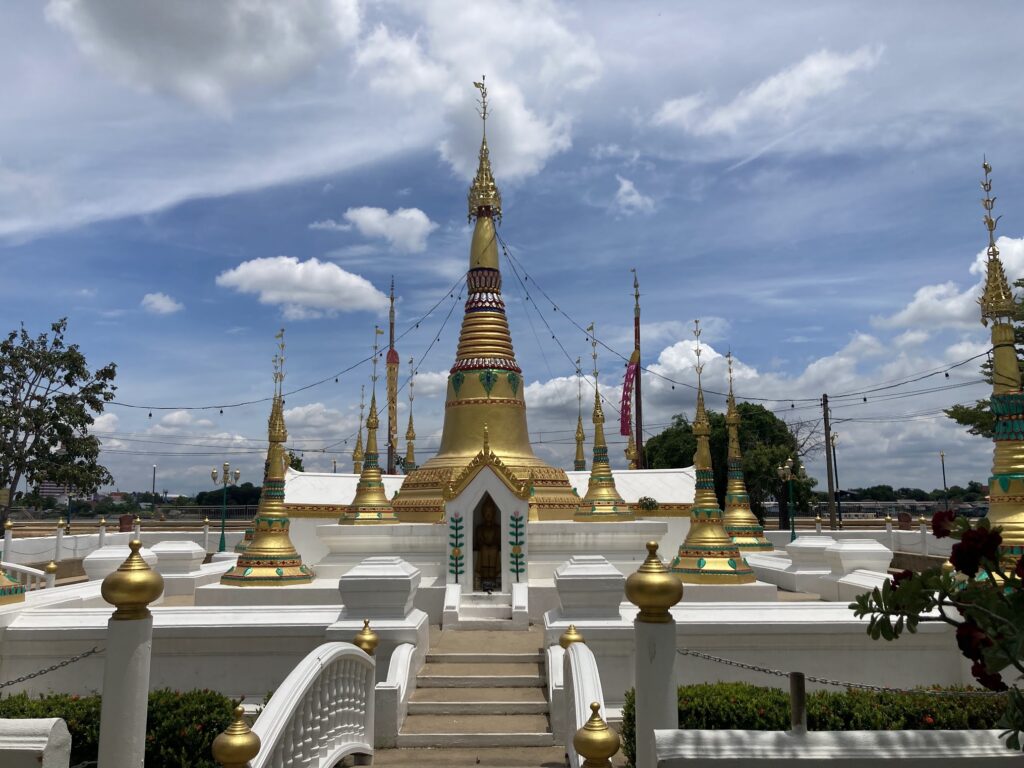
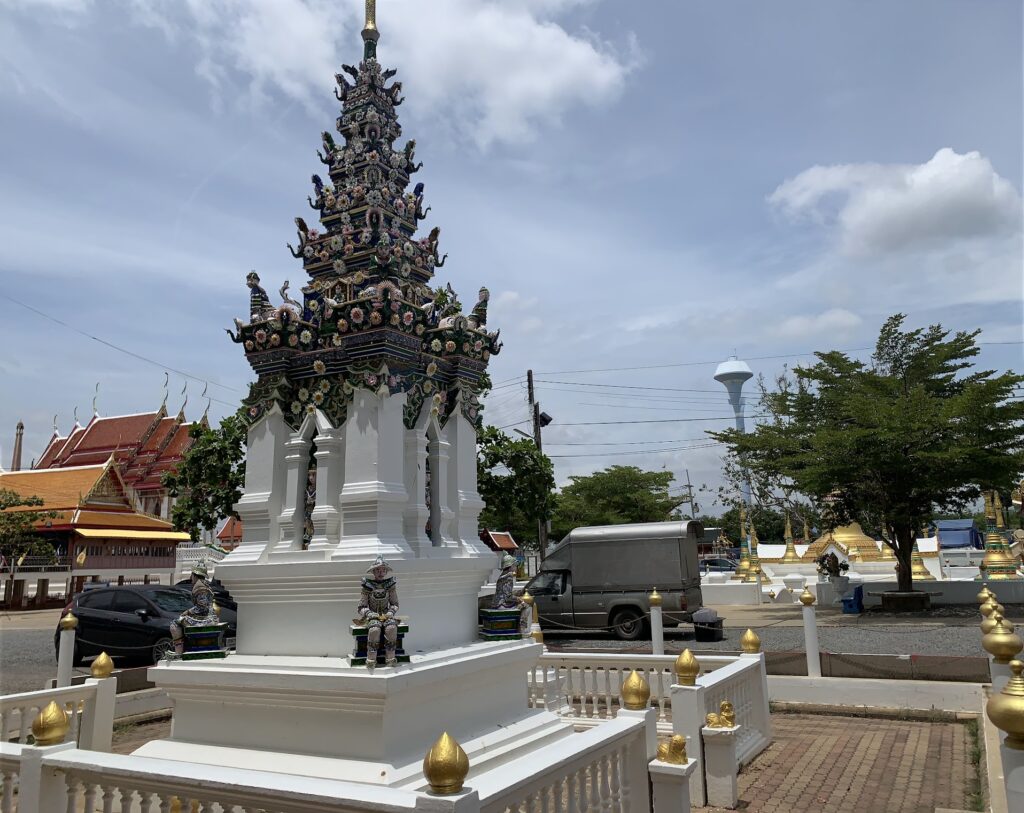
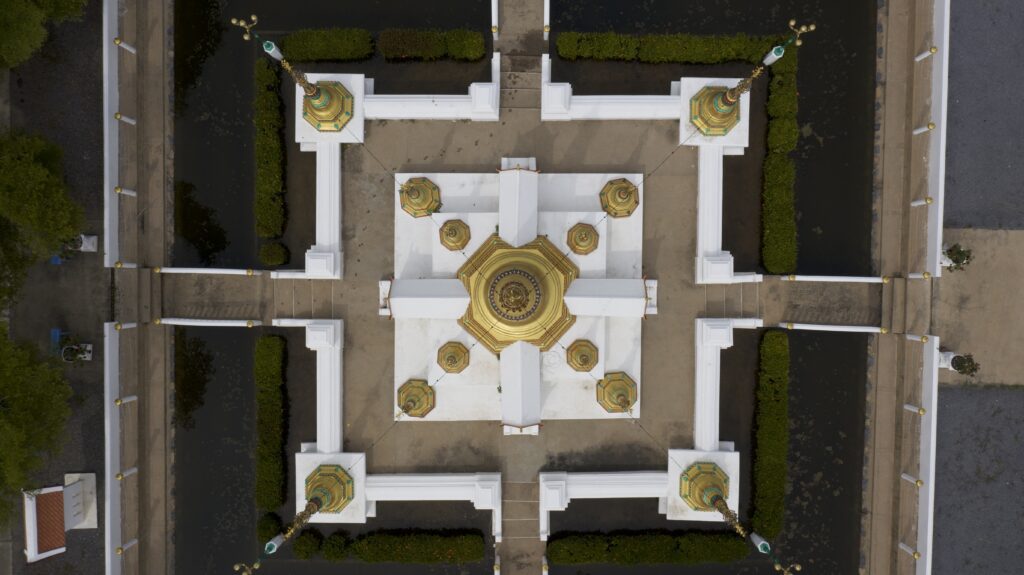
The story of Wat Chedi Thong itself runs deeper than what first meets the eye. Large red sandstone Sema boundary stones, characteristic of Ayutthaya art, testify to its ancient origins. Later, during the Thonburi and early Rattanakosin periods, Mon refugees fleeing conflict in Mottama, led by Phraya Ram (son-in-law of Phraya Cheng, also known as Chao Phraya Mahayotha), arrived. They took the initiative to restore Wat Chedi Thong, breathing new life into it by constructing new monastic buildings and halls. The temple officially received its Wisungkhamsima (royal land grant for consecration) on February 17, 1953 CE
Mon Nai Phaendin Sayam (Mon in the Land of Siam) by the Institute of Asian Studies, Chulalongkorn University
Mon Nai Mueang Thai (Mon in Thailand) by Suporn Ocharoen
Special thanks to: Manop Kaewyok, Wat Sala Daeng Nuea Mon Community And information from the website: http://www.dhammajak.net



Leave a comment