

- February 22, 2026
- 0 Comments
- By admin
Some places are not destinations but crossings of centuries.
In the ancient capital of Ayutthaya, where brick stupas rise like weathered candles from the earth, the rhythm of history is not only found in ruins. It moves. It breathes. It walks on four pillar-like legs.
Welcome to Ayutthaya Elephant Palace & Royal Kraal, known locally as Wang Chang Lae Phaniat — the heart of Thailand’s elephant legacy.
Where the Past Still Has Footsteps
Set in the quiet folds of the Pratuchai Sub-district on Pa Thon Road, the camp rests within the embrace of the Ayutthaya Historical Park. It does not compete with the ruins. It belongs to them.
Just a short walk from the contemplative remains of Wat Phra Ram and the storied grounds of Khun Phaen House, Wang Chang feels less like an attraction and more like an echo — a continuation of the city’s long memory.
Unlike modern zoos framed by steel and glass, this place breathes the same warm air as the temples. Elephants stroll past crumbling brick walls. Their silhouettes rise against chedis glowing amber at sunset. Dust lifts softly beneath their feet. For a moment, the centuries collapse.
The Meaning of the Royal Kraal
The word Phaniat — the Royal Kraal — carries the weight of strategy and survival.
In the golden age of the Ayutthaya Kingdom, this was no spectacle staged for cameras. It was the epicenter of power. The kraal was the great enclosure where wild elephants were captured, studied, trained, and prepared for royal service.
Elephants were:
- Royal mounts for kings and nobles
- Living engines that hauled stone to build temples
- War machines — the “tanks” of Southeast Asia’s battlefields
Ayutthaya was once the center of elephant knowledge in the region. To understand Thai history is to understand the elephant — its strength, its intelligence, its symbolism.
Today, the Elephant Palace carries that legacy forward in three intertwined threads.
Tourism
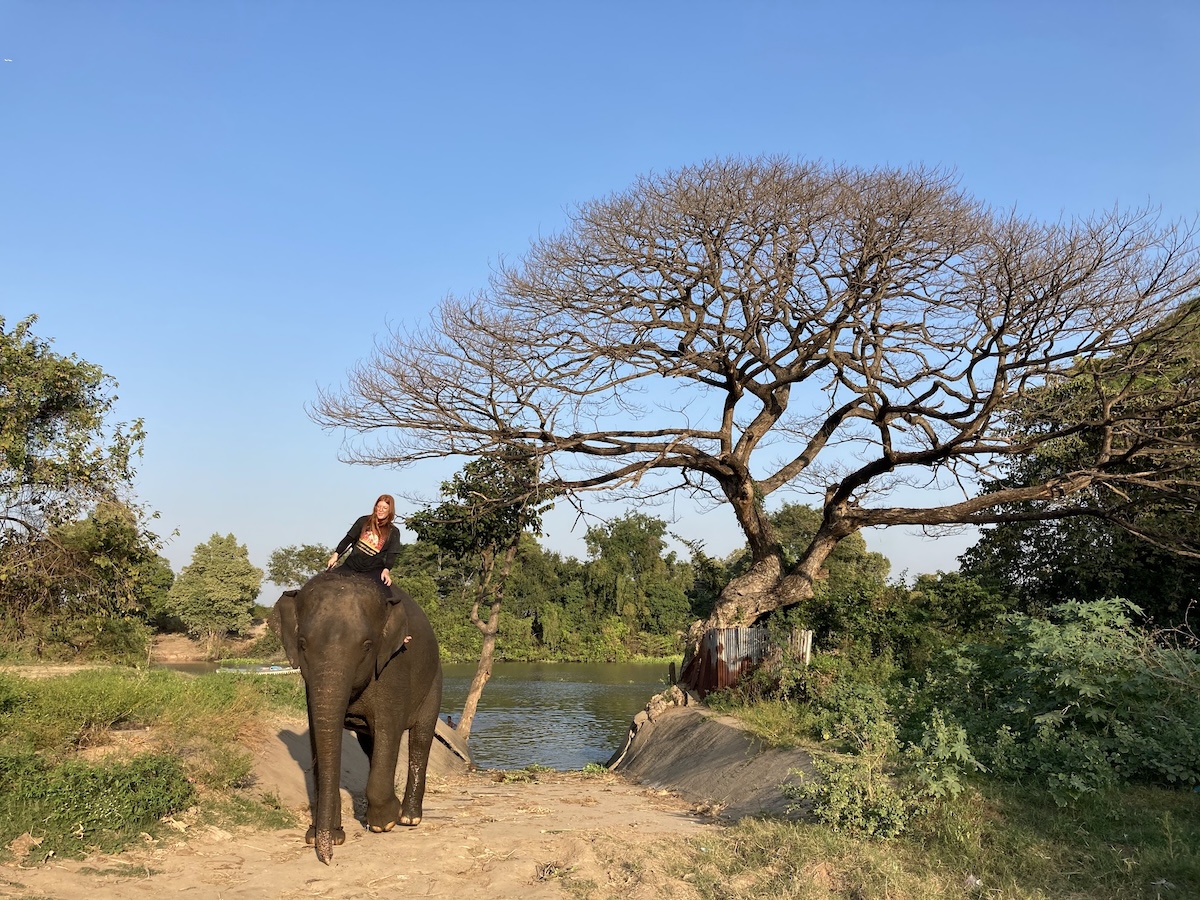
Visitors can ride elephants through the historical park, retracing pathways that once carried kings. The experience mirrors royal processions of old — though it is also one that modern travelers increasingly approach with reflection and care.
Education
Stories are told here. Of elephant duels in ancient warfare. Of temple construction powered by muscle and patience. Of the sacred bond between mahout and elephant — a partnership measured not in years, but in lifetimes.
Conservation
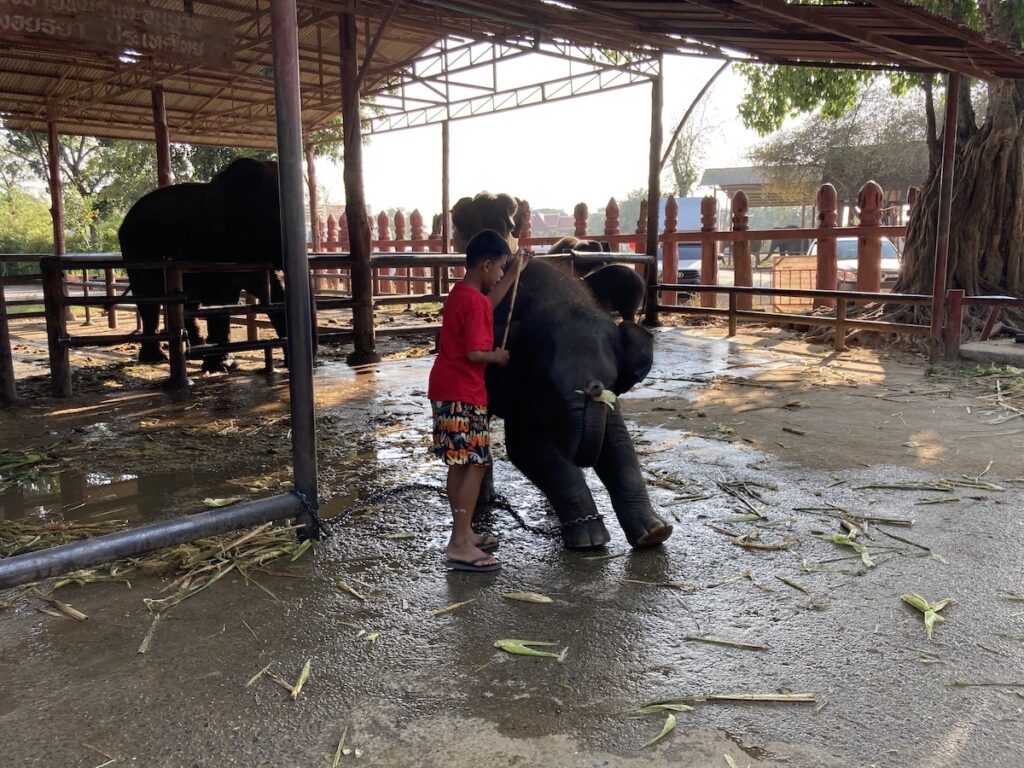
Behind the scenes are generations of mahouts whose families have worked alongside these giants for decades. Their knowledge — quiet, inherited, deeply human — forms part of the preservation effort.
Between Wonder and Reflection
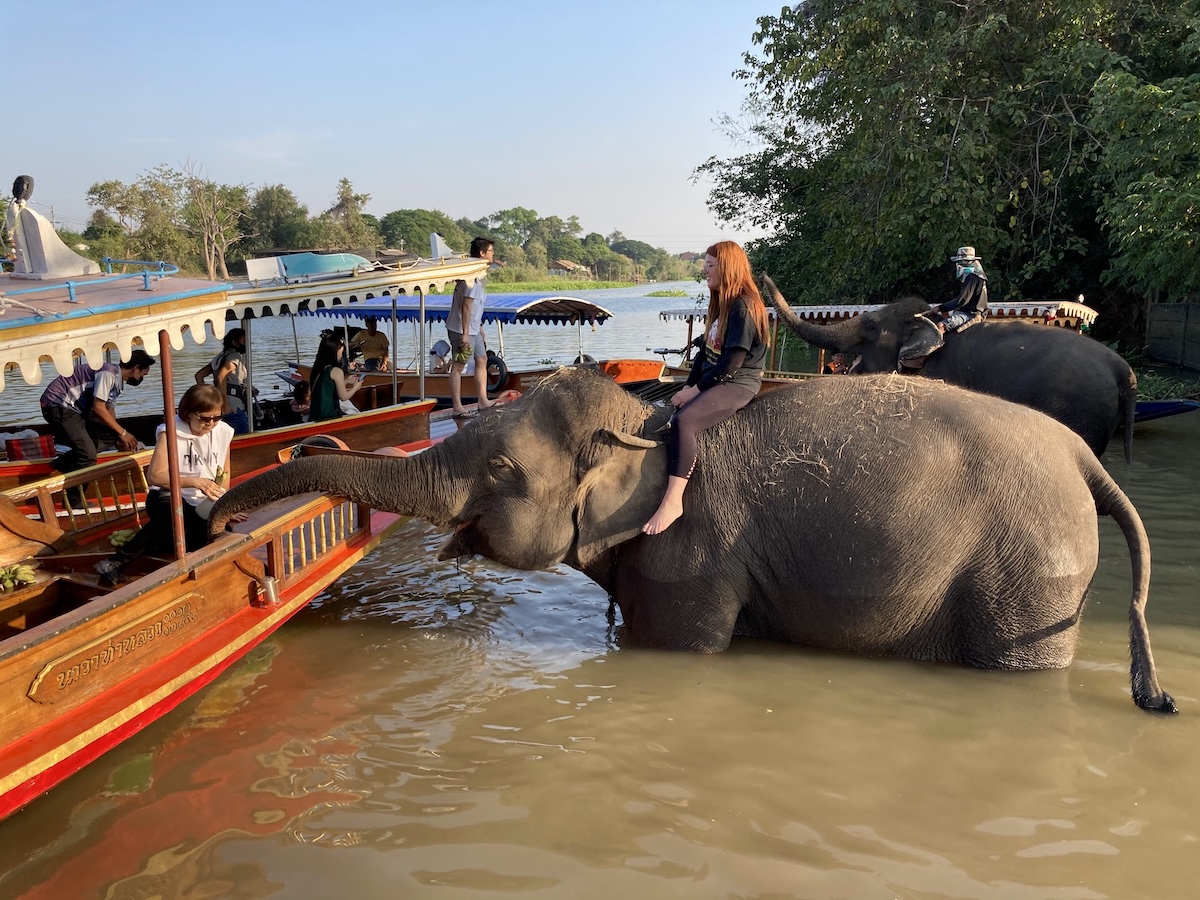
The atmosphere is vibrant. Laughter blends with the rustle of banana leaves. Children hold woven baskets filled with cucumbers and bananas, offering them shyly as trunks reach forward with surprising gentleness.
Eye to eye. Hand to trunk.
Feeding the elephants becomes less about spectacle and more about connection.
Yet the modern traveler walks with awareness.
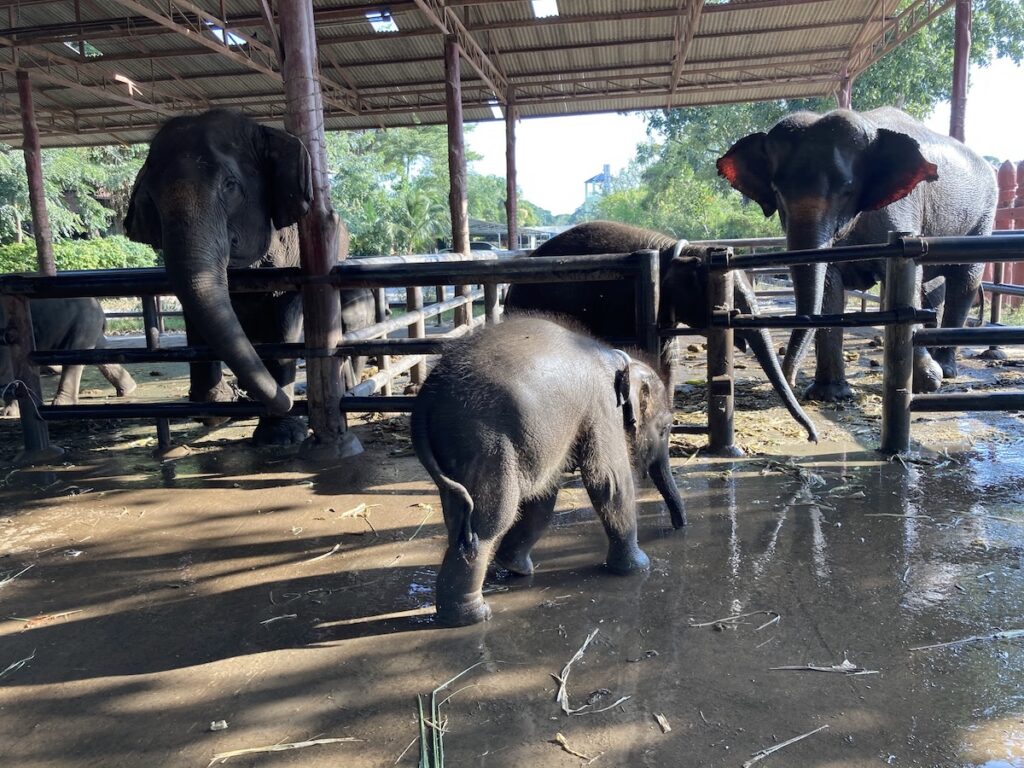
Across the world, conversations about elephant tourism have shifted toward sanctuary models — places without riding, focused entirely on rehabilitation and natural behavior. While Wang Chang maintains its traditional offerings, there has been growing attention to welfare and cultural preservation.
Nearby, facilities such as Elephantstay focus on long-term care, breeding programs, and support for retired elephants — a quieter, more contemplative chapter in Ayutthaya’s elephant story.
Travel like the wind — but think like the earth.
Getting There — An Easy Pilgrimage
Ayutthaya lies just 80 kilometers north of Bangkok, close enough for a day trip, far enough to feel like another era.
By Train
Depart from Krung Thep Aphiwat Central Terminal and ride north past rice fields and canals. Once in Ayutthaya, climb into one of the city’s frog-nosed tuk-tuks and simply say: “Wang Chang.” The driver will understand.
By Car
Drive north along Highway 32. The road is straight, the journey unhurried. Parking near the historical park is easy, and the ruins begin almost immediately.
When Giants Guard the Ruins
There are places where history stands still.
And there are places where history walks beside you.
At Wang Chang Lae Phaniat, elephants move through the ancient capital as they once did — not relics, not statues, but living icons of a kingdom that understood their strength and spirit.
Stand beneath a fading stupa. Watch an elephant pass through golden light. Listen to the soft thud of ancient footsteps on modern soil.
In that moment, you are not simply visiting Ayutthaya.You are traveling through time.
Leave a comment