THE 365 DAY TRAVEL

Wat Prayurawongsawat

Wat Prayurawongsawat

Travel Like the Wind – Suchart Choolee

When the wind carries you to Wat Prayurawongsawat, it may very well bring you to rest in a place where history, art, culture, and deep-rooted faith permeate every inch of sacred ground.

Known affectionately by locals as “Wat Lek” or “Iron Temple,” Wat Prayurawongsawat is nestled on the Thonburi side of the Chao Phraya River, near the foot of the Memorial Bridge (Phra Phuttha Yodfa Bridge) in Bangkok. The temple was established in 1828 (B.E. 2371), during the reign of King Rama III, by Somdet Chao Phraya Borom Maha Prayurawong (Dis Bunnag). It was built as an offering of merit and to serve as a spiritual center for the surrounding community. The temple’s more colloquial name, “Wat Lek,” comes from its distinctive iron fence, forged into the shapes of ancient weapons—spears, swords, and axes—setting it apart from other temples with its unique appearance.

Over the years, the temple has undergone several restorations led by members of the noble Bunnag family, including Somdet Chao Phraya Borom Maha Sri Suriwong, Chao Phraya Surawongwaiwat, and Chao Phraya Surawongwatanasak. Through their efforts, the temple has evolved into not only a religious sanctuary but also a cultural landmark.

Occupying over 26 rai (about 10 acres), Wat Prayurawongsawat stands out for its refined and intricate Thai architecture. The ordination hall (ubosot) is a beautiful brick-and-mortar structure in traditional Thai style, with a two-tiered tiled roof, decorated with chofa, bai raka, and hang hong (ornamental roof finials). The pediment is carved with floral motifs of the Bunnak flower, and its unique octagonal windows catch the eye. Inside, the principal Buddha image, in the Maravijaya posture, is named “Somdet Phra Phuttha Thammawichetsadasada”, a name graciously bestowed by His Majesty King Bhumibol Adulyadej (Rama IX).

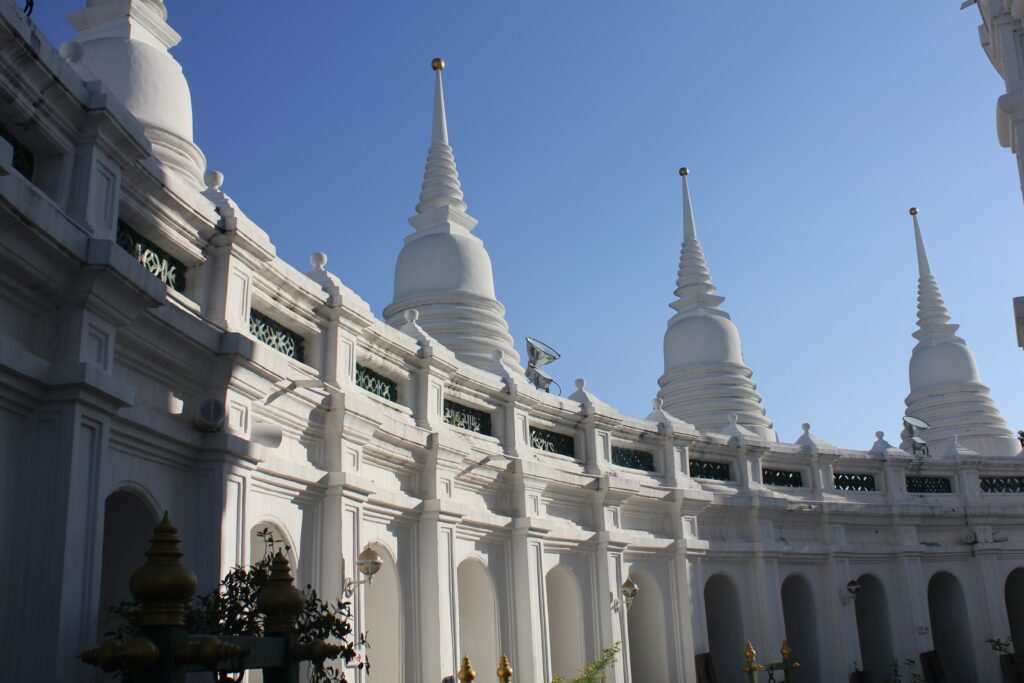
Wat Prayurawongsawat Worawihan temple in Bangkok, Thailand.
Wat Prayurawongsawat (Wat Prayoon), a Buddhist temple in Bangkok, Thailand.
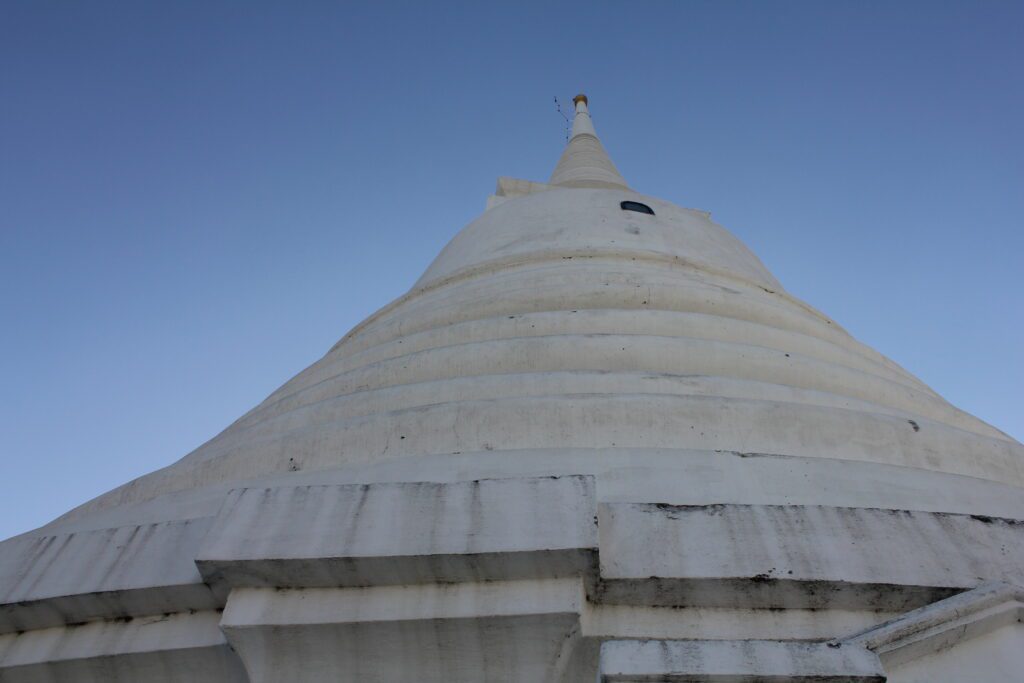
White chedi (stupa) of Wat Prayurawongsawat Worawihan, Bangkok, Thailand.
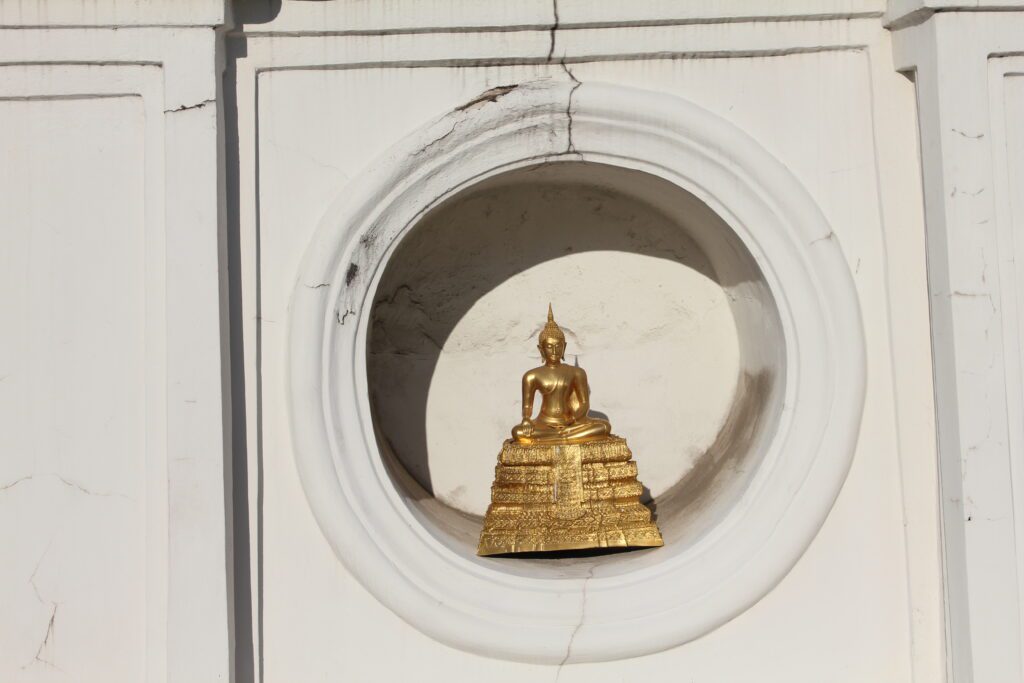
Golden Buddha statues at Wat Prayurawongsawat Worawihan, Bangkok, Thailand.

Another sacred space within the temple is the viharn (assembly hall), which houses the highly revered image of Phra Phuttha Nak Noi, also known among Chinese devotees as “Lak Noi,” meaning “six-layered lotus petals.” This image is also in the Maravijaya posture and is greatly venerated by the local community.

The Great Chedi (stupa) rises majestically within the temple grounds. Construction began during the temple’s founding but was not completed until it was carried on by Somdet Chao Phraya Borom Maha Sri Suriwong. The bell-shaped chedi is surrounded by 55 arched niches housing Buddha images, and further encircled by 18 smaller stupas. Within its chambers rest relics of the Buddha and the ashes of the Bunnag family.

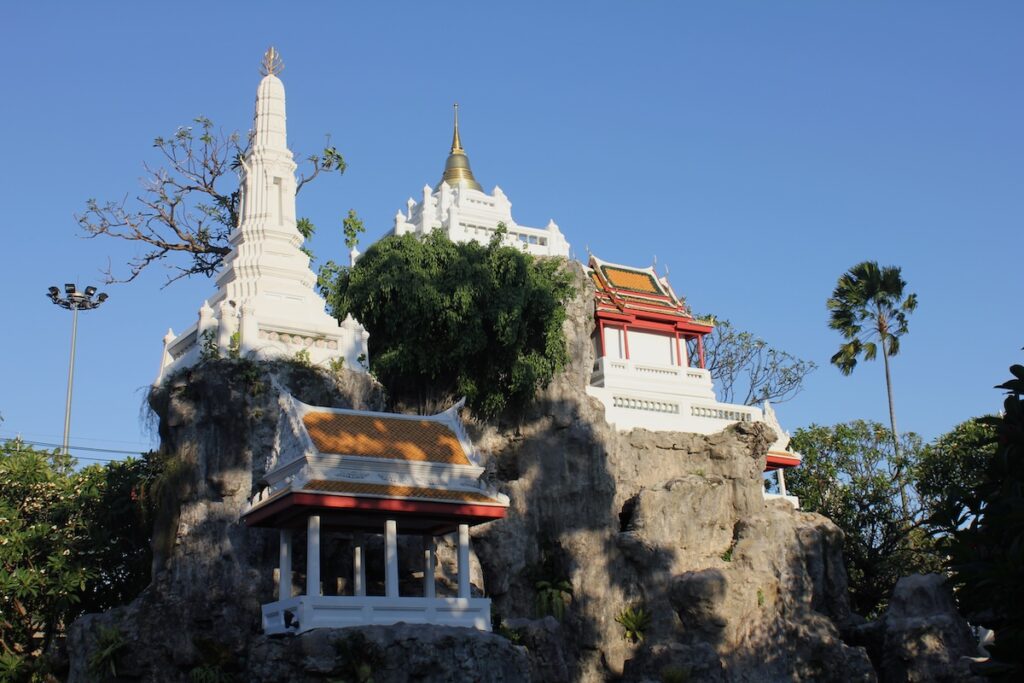
One of the most captivating features of the temple is the Khao Mo, an artificial mountain rising from a pond at the temple’s front. Decorated with lush trees, small caves, and traditional Chinese statues, its summit is crowned with a miniature chapel and chedi. At the base, a serene reclining Buddha rests within a cave. This area also serves as a cemetery, where ashes of the deceased are enshrined in stupas that beautifully blend Thai and Western architectural elements—a testament to the temple’s inclusivity and reverence for diverse cultural heritage.

Wat Prayurawongsawat is, therefore, more than a place of worship. It is a living poem of the past, still echoing in the present. Every brick, doorway, and stupa tells a story—of devotion, of artistic mastery, and of the delicate bridge between history and modern life.

If the winds of travel ever lead you to the Thonburi side of the river, pause your steps at Wat Prayurawongsawat. You may come to realize that true travel is not merely the movement of the body—but the journey of the heart into the depths of memory, heritage, and the enduring soul of Thailand.

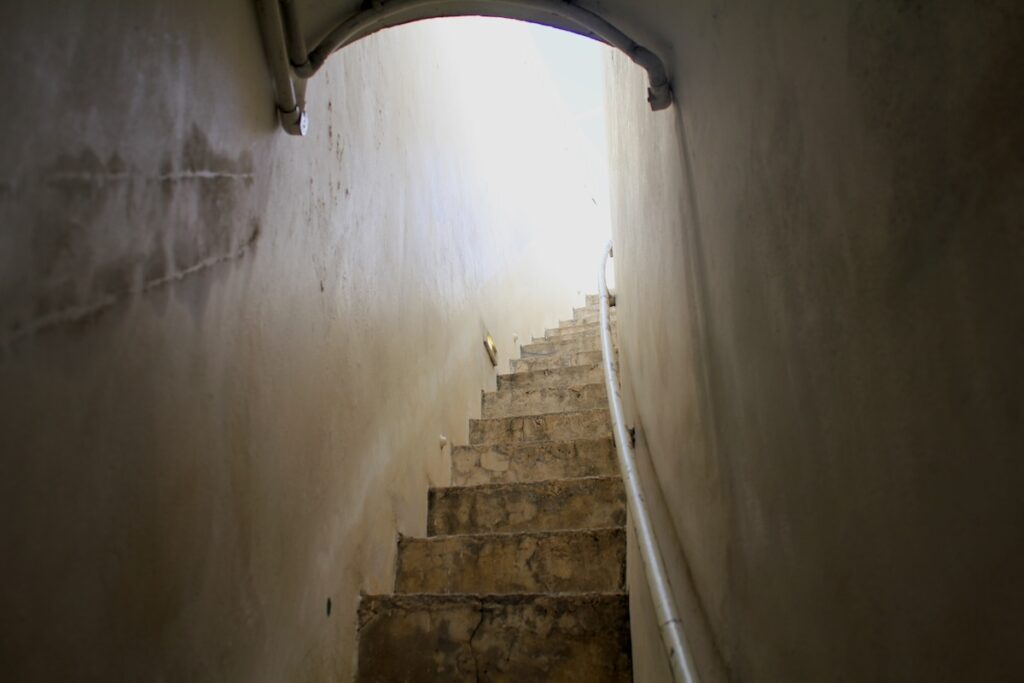
Dimly lit staircase in Wat Prayurawongsawat, Bangkok, with worn concrete steps and aged walls.
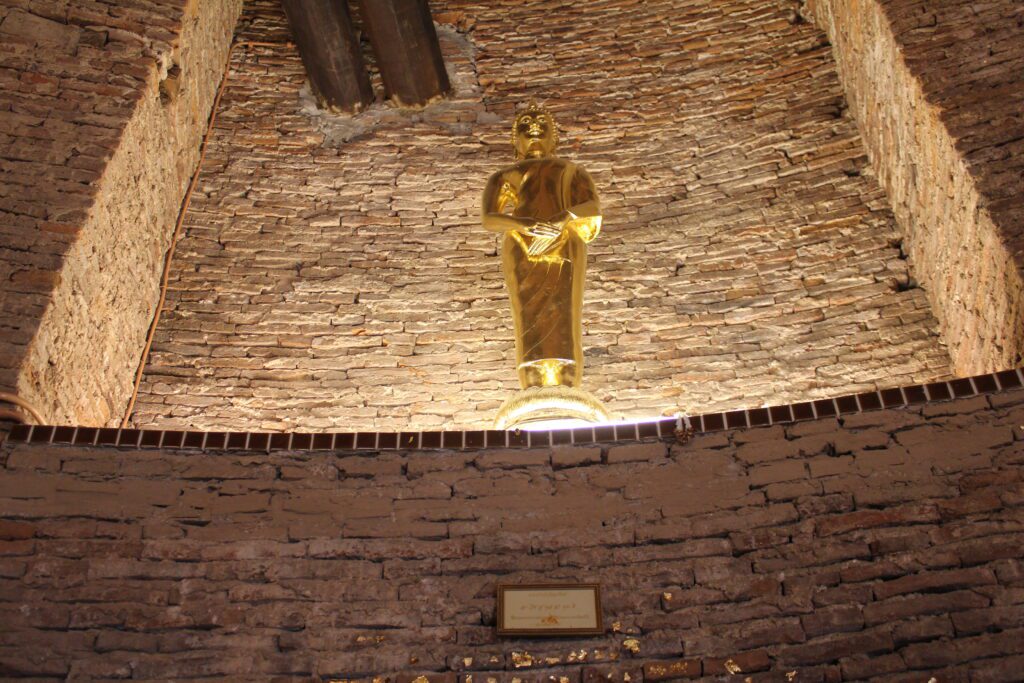
Golden Buddha statue inside a brick chedi at Wat Prayurawongsawat Worawihan, Bangkok, Thailand.
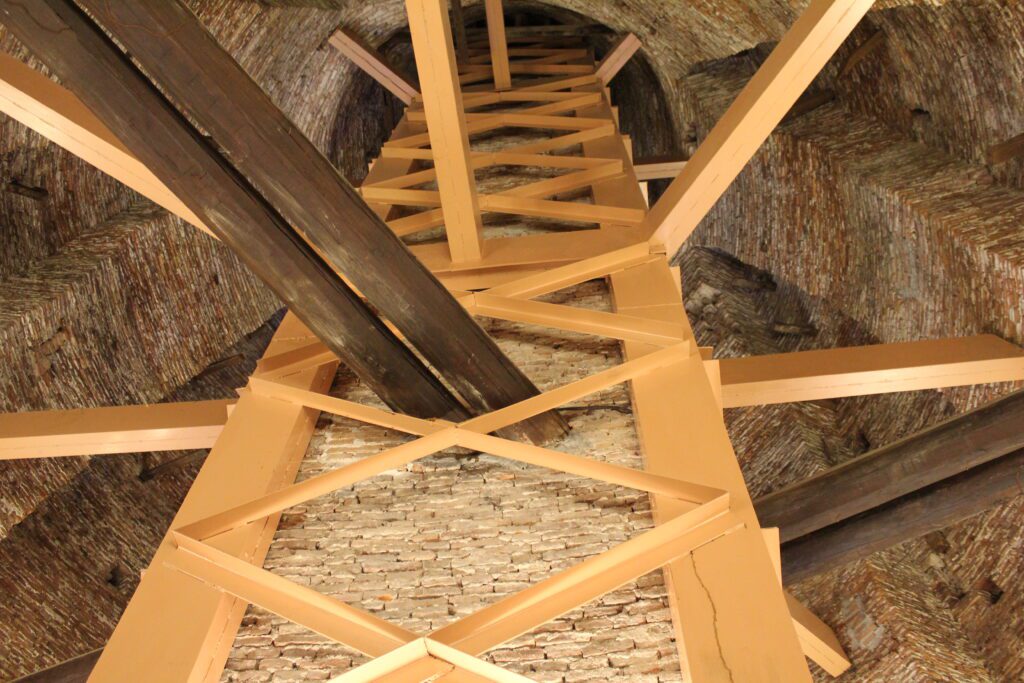
Interior support structure of the bell tower at Wat Prayoon, Bangkok, Thailand.
Wat Prayurawongsawat Worawihan (Wat Prayoon), a 19th-century Buddhist temple in Bangkok, Thailand.

Leave a comment